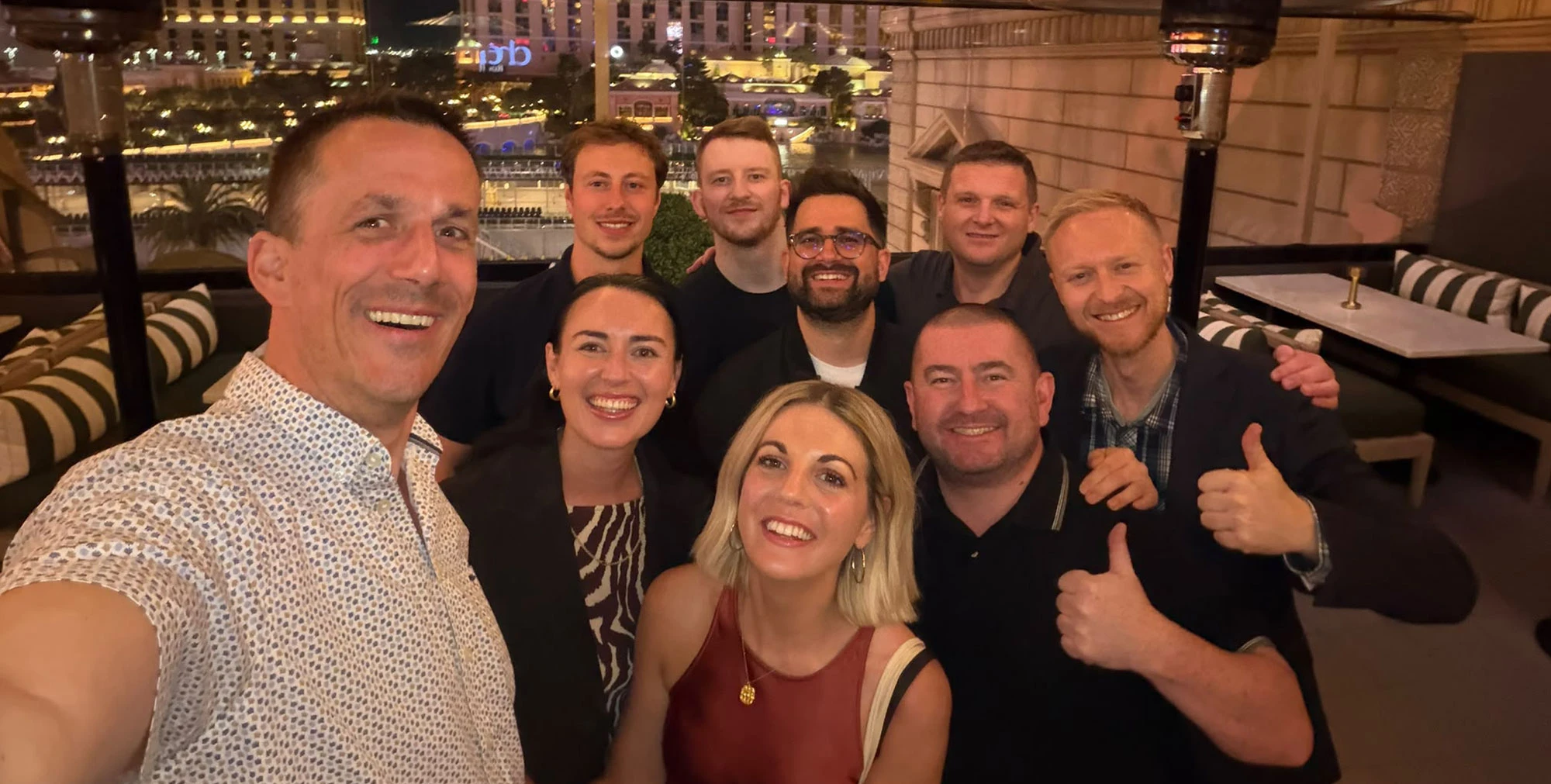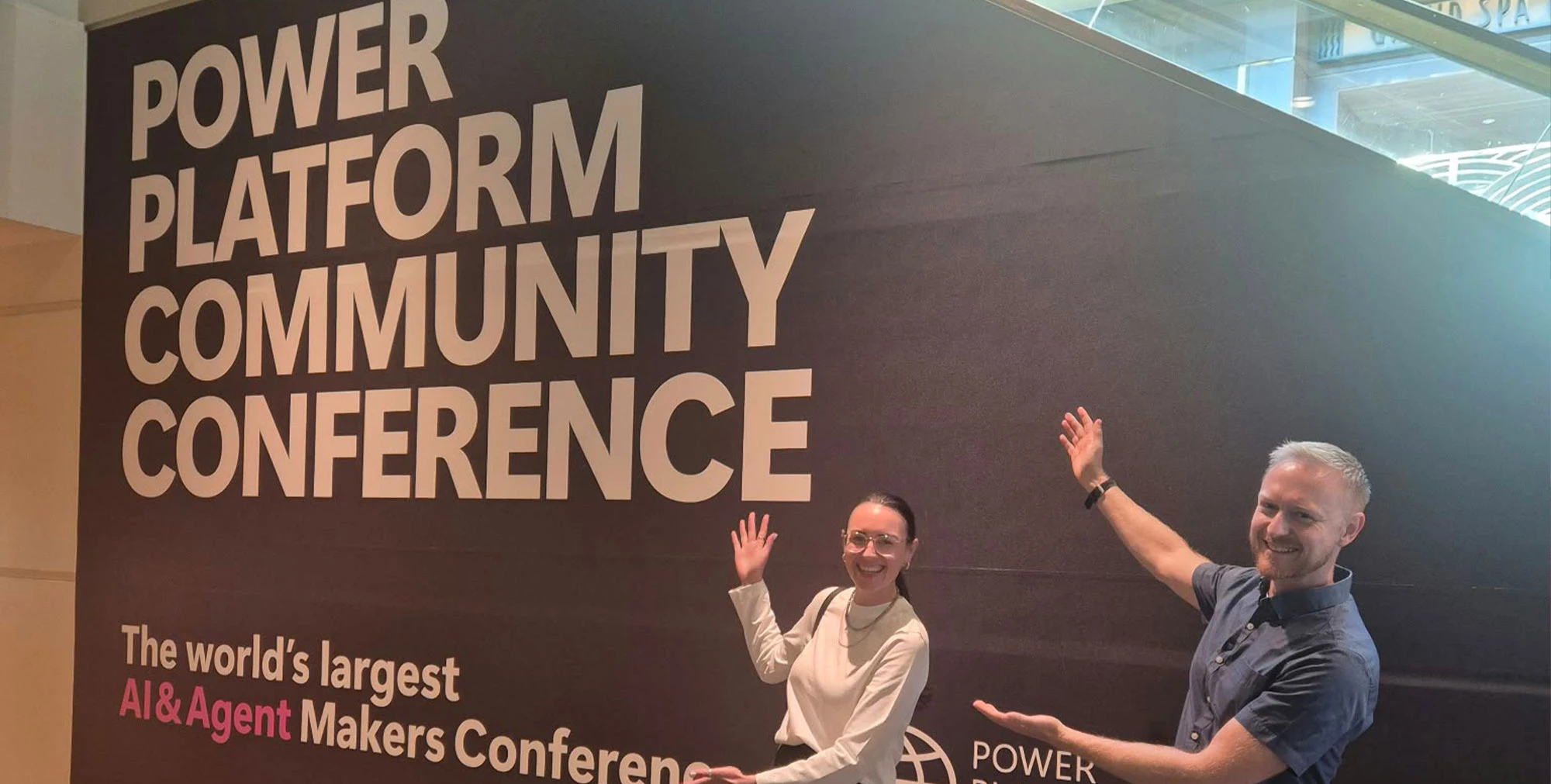
I came back from the Power Platform Community Conference in Las Vegas with pages of notes on AI, agents, Power Platform, skills, FinOps and where delivery is heading, and when I read back through them, one idea kept tying the conversations together.
We've got very good at making it easier to build, but now we need to get just as good at managing what happens next.
If anyone can create an app, an automation or an agent, building it is no longer the hard part. The hard part is deciding whether we should, and then making sure it keeps creating value once it's live.
Start With the Problem
AI gives us more possible answers, so asking the right question matters more than ever. Before we choose any technology, we need to understand the business problem, the process behind it and the outcome we're trying to achieve. Sometimes that means challenging the process itself. If we designed this process today, with everything that's now available to us, would we still design it the same way?
This is where I think advisory work becomes really important. It's tempting to start with an agent because agents are exciting, but that is the wrong way round. We should first work out what needs to change in the process, then consider whether an agent, an automation or an application is the right way to achieve that change.
Make Governance an Enabler
Having more people able to build is a brilliant opportunity, but it brings an obvious challenge with it. Somehow, we have to enable thousands of people to build without creating thousands of problems along the way.
For me, the answer is to develop how work gets done and how it's run safely in parallel. As we bring people, applications and agents into end-to-end workflows, we need to build the operating model alongside them: clear ownership, security, visibility and the skills to manage what we've created. These aren't separate pieces of work, with delivery waiting for governance or governance catching up afterwards. They need to inform each other as we go.
Done well, that operating model gives teams more than boundaries. It gives them reusable patterns and the confidence to build without starting from scratch every time. Each new workflow can draw on what is already in place, making it easier to move faster and scale safely, rather than adding in another isolated solution to manage. That's what making governance an enabler means to me.
Treat Go-Live as the Beginning
Looking at it through a delivery lens, this was the idea that stuck with me most, because for a long time, go-live has felt like the finish line.
With AI and consumption-based technologies, I don't think that holds any more. The questions after launch matter just as much as the ones before it. We need to know whether people are actually using what we've built and whether it's delivering the outcome we expected, as well as what it costs to run, as consumption changes over time. Those answers then shape what we enhance next, and when it's time to consolidate or retire something.
That’s why I think FinOps needs to be part of delivery, not something we only think about once we’ve gone live as a cost cutting exercise. It’s about understanding what we’re using, what it’s costing us and the value we’re getting from it, then using that to make better decisions about what we do next.
Higher consumption isn't necessarily a problem if it's creating proportionately more value for the business, whereas rising consumption with little impact should prompt a very different conversation. What matters is having the visibility to tell the two apart, and making that part of everyday decision making.
Build, Learn, Enhance
Following on from that, I think we need to stop treating solutions as finished, because AI capability is moving far too quickly for that.
Once something is live, real users show us things that discovery never could. New capabilities keep appearing and business priorities shift, and the cost of running a solution can change along with them. So delivery becomes a continuous cycle that runs from discover through govern, build, adopt, measure, optimise and enhance, and then starts again.
Seen that way, enhancement is a regular chance to ask whether a solution could deliver more value or cost less to run, which is far more useful than working through a backlog of change requests. It changes the relationship between customer and delivery partner too.
Sometimes the right answer will be to build for a customer and sometimes we'll build alongside them, but increasingly our role will be to give organisations the skills, guardrails and reusable patterns to build for themselves. I'd measure our success by the capability and value we leave behind, and creating dependency works against that.
What I'm Taking Home from Las Vegas
For all the talk about AI, agents and new technology, the thing I keep coming back to is everything that surrounds the technology.
Building is becoming democratised, but creating sustainable value hasn't caught up. The organisations that do well will be the ones that target the right problems, put sensible guardrails in place, understand the economics of what they run and keep improving what works. How much they build will matter far less.
That's what makes delivery so interesting to me right now, because so much of the value sits after launch. Go-live is the moment you finally have real evidence in front of you. You can use it to make the next decision well, and that's where the transformation really starts.
If you’d like to learn more, we are hosting a webinar for our customers where we will cover everything you need to know coming out of Microsoft's Power Platform Community Conference (PPCC) 2026.